Showing posts with label Organizations. Show all posts

Thursday, June 23, 2011

Creating and Preserving Brand Heritage

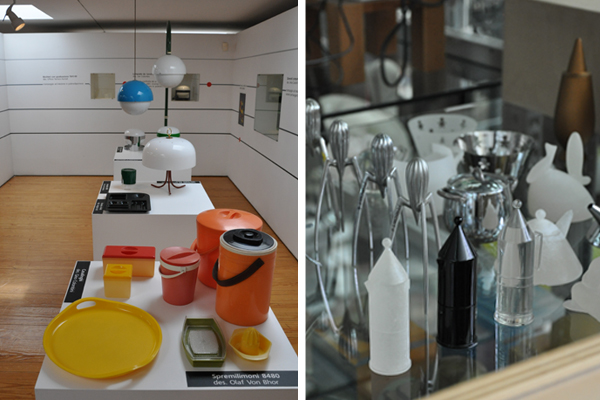
Various corporate museums throughout Florence and Milan - June

Richard Ginori, Piaggio & Salvatore Ferragamo


Kartell & Alessi


A corporate museum is a type of institution that combines elements of a profit-making organization with a traditional museum, giving the public a glance into the past, present and future of a company. We've visited several corporate museums on this trip, each one taking a different approach in exhibiting the evolution of the products, people and organization of the company.


Sunday, June 19, 2011

Fabrica- Exploring Forms of Communication

Fabrica, Venice- Sunday, June 19th, 2011


On June 14th, we visited Fabrica, a design think tank for the Benetton group researching different forms of communication. It is a great place for young designers to experiment, grow and express themselves.

Thursday, June 16, 2011

Korean Pavilion at the 54th Biennale

54th Biennale, Venice Giardini - Thursday June 16th, 2011

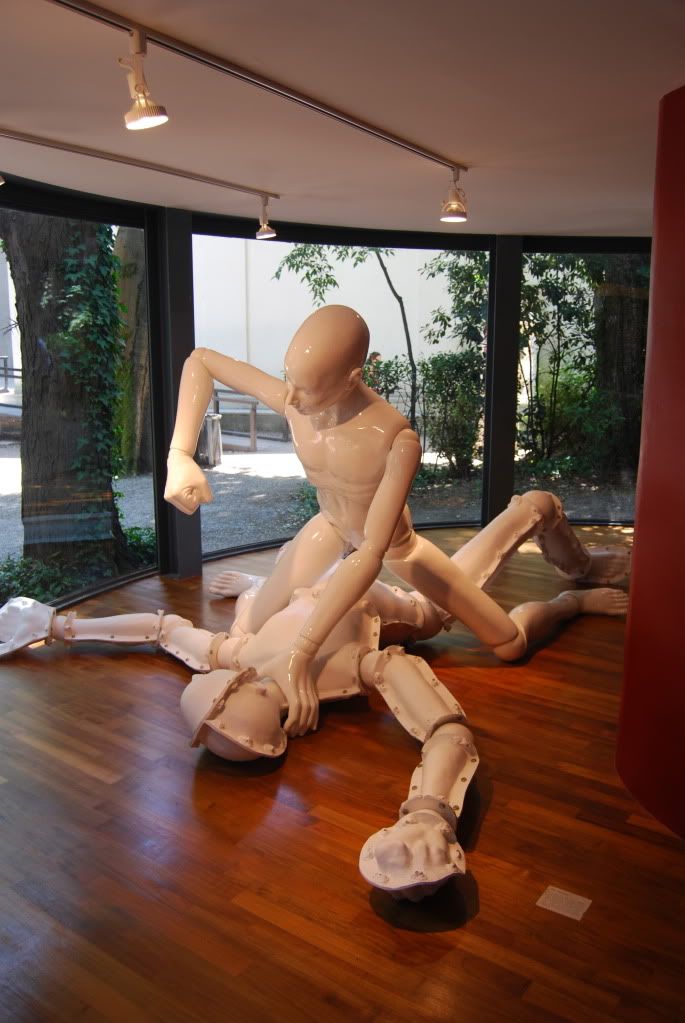
At the Venice Biennale, the Korean Pavilion presented numerous multimedia works by artist Lee Yongbaek. The exhibition of which he titled, "The Love is Gone but the Scar will Heal", explores identity and existentialism in the world of contemporary societies filled with pain. Represented in a piece of his work that I found particularly interesting was called, Pieta, in which human-like cast-molded sculptures were positioned in various stances. These various stances depicted numerous themes and messages that illustrates the pain and history of Korea's modern politics, and its hope for the future.


In the above photo, 'self-hatred' is illustrated where the molded figure is found destroying the mold from which it was made.

Danish Pavilion at the 54th Biennale

54th Biennale, Venice Giardini - Thursday June 16th 2011

Many pavilions at the 54th Biennale in Venice were displaying art installations that were neither interactive, nor meaningful to an international audience. The installations were interesting to look at from an aesthetic point of view, but were lacking a meaningful topic that visitors from all over the world could relate to. The Bienalle is a meeting place for artists from all over the world to display their work, so it would be best if they chose this special occasion to communicate a remarkable idea to the audience.

La Biennale di Venezia: History and Traditions

La Biennale di Venezia, Venice - June 16th

While in Venice, we attended the Biennale of Art in Giardini and Arsendale. It takes place every odd year, in conjunction with the Venice Biennale of Architecture, which takes place every even year. It is associated with great history and traditions, making it one of the biggest and most prestigious exhibitions in Italy.

Wednesday, June 15, 2011

Fabrica Renews Zanotta Products with "Trans-Forma"

Fabrica, Benetton Group Research Centre, Treviso - Wenesday, June 15th, 2011

"Sciangai" designed by Jonathan De Pas, Donato D'Urbino & Paolo Lomazzi

Displayed at the Milan International Furniture Show in April 2009, The Trans-Forma project is a good example of renewal and inspiration. The young designers of Fabrica took seventeen Zanotta products and gave them new life with a simple re-interpretation.

Colour Me Impressed: Interactive Window Displays

Fabrica by Bennetton Group, Venice – June 15, 2011

Photobucket

Screen shots of our own Colors in Movement experience. Michelle and I also made an animated gif, you can see here! http://colorsofmovement.net/post/6830942362

While in Milan I wrote a post about the window displays I noticed while walking some of the major streets. I spoke briefly about the time and thought that is evidently behind the design of each window, and the trends that I observed. Our recent visit to Fabrica presented a perfect opportunity for me to relate back to my previous post, and to give a more detailed example of a specific type of window display that we learned about while we were there.

Located just outside of Venice, Fabrica is a communication and research facility founded by the Bennetton Group. It was built as a creative space for aspiring young artists and designers as a place where they are able to collaborate on conceptual, innovative and ground-breaking projects. Since its inception in 1994, the members of Fabrica have developed numerous projects, including art installations, furniture, documentaries, and advertising campaigns. One of their more recent projects, developed and realized by Paulo Barcelos, is a window display created for the United Colors of Bennetton retail stores.

Fabrica - Communication of Social Issues

Fabrica by Benetton Group, Venice - Wednesday, June 15, 2011

The building which Fabrica runs out of.
On Wednesday we visited Fabrica which is seemingly located in the middle of nowhere but is actually in the heart of an industrial district and where the Benetton Group first began. The building itself was designed by Tadao Ando, the famous Japanese architect, and mixes the classic 17th century villas with a modern style made of concrete, aluminum and glass.

Fabrica, Benetton’s Communication and Research Centre.


Fabrica, Treviso (near Venice) - Wednesday, June 15th


With a modern complex built into the remains of an ancient villa from the 17th century, the fusion of the past and the present designed by architect Tadao Ando created Fabrica, Benetton’s communication and research centre.


Financed by Benetton, Fabrica, with the aim of combining culture and industry, was established in 1994 and is located in Treviso (near Venice). It welcomes young artists and designers with a one year study grant from all around the world to work together and develop projects with a focus on social issues. Mediums in which they use to express their work include design, music, film, photography, publishing and web development under the guidance of experts.
For more information, visit


Image Sources: Fabrica Complex 

Shannon, Victoria, Calvin

Tuesday, June 14, 2011

Investing in Young Designers

Lago Studio, Venice - Tuesday, June 14th, 2011 & Fabrice, Venice - Wednesday June 15th, 2011

 
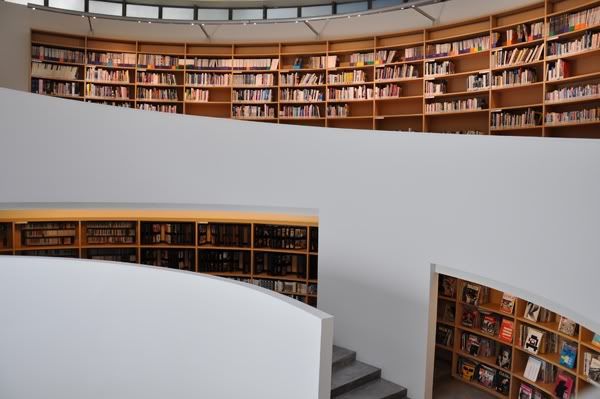
The library and outdoor terrace at Fabrica - places to get the creative juices flowing.

Throughout our Grand Tour of Italian design, many of us have noticed that a good portion of this country's designers are from an older generation. Many of the studios and offices we visited were well established and widely known firms. We began asking, "Where are the young designers in Italy?" Our visits to Lago and Fabrica not only answered our question, it also left us with a satisfied feeling that as young designers, we have chances of creative freedom before setting out into the working world.

Thursday, June 9, 2011

The Accessibility of Design Through the Design Library

The design library an open window to young designers in Italy and soon around the world

Design Library, Milano – Thursday, June 9th

Part of the Design Library's collection of books and magazines

The Design Library in Milan is an example of easy accessibility to the world of design to young designers. With its >5000 books and >1500 magazines, its lectures on every Thursday and a swirl of events that take place, it’s difficult for young and professional designers to resist the curiosity and knowledge that the library provides. What’s even more beneficial is that anyone is able to present at any lecture, not just famous designers or design professors. With the many styles of lectures – for example the Castiglioni format (finding objects in the streets and explain why you picked it) or the Vitamin D format (young designers, <35 years old, get a half hour to talk about themselves and their work), many varieties are given to the students and young designers in terms of witnessing different perspectives of design and its diversity.

This library is just an example of the many outlets of design that young designers get exposed to in Italy. The degree of accessibility is incredibly high – especially through the amount of design museums, exhibitions, studios and even retail stores and shops. The number of studios and museums that we’ve been to are minimal compared to the amount in Italy itself and we’ve visited a LOT! 

Shannon, Victoria, Calvin

Youth in the Design Community


Founded by Valerio Castelli, Design Library started in Milan and now has become a hub for designers to meet. The library houses a growing collection of books and magazines accessible to the public—through this establishment a vital part of any design community has been made. Not only a space for resources, Design Library has become an area for people to convene and engage in lectures, discussions, and interviews. Young people are essential to this particular library as they comprise of 70% of the people coming in. Castelli has further integrated youth into Design Library’s values by inviting them the opportunity to speak and show their own work through a program called 'Vitamin D'. If a young designer meets three requirements (he or she must be no older than 35 years old, have a website, and product in production) they are given time to explain themselves and show their work. Design Library is a prime example of the constant effort from both older and younger generations to come together and share ideas.

Castelli was also one of the founders of Domus Academy, a design school in Milan. Recognizing the significance of an investment in teaching youth is an essential component when considering the future of design, as the dependency is on the young people who are influencing the direction of where market trends are heading.

Currently, there is another Design Library open in Shanghai; Castelli has a goal of at least ten of these libraries in the world.  Having more of these establishments will gather all the knowledge of a design culture together in a communal area; creating a space for learning and networking between both generations.

- Justine, Remi, Carmen

Expanding the Design Community

Design Library, Milan - Thursday, June 9th, 2011

The Design Library in Milan is a valuable resource for young designers who wish to feed their curious minds. Current and past issues of magazines, books and articles related to design are all available for the public to peruse here. As well, weekly lectures gather people with common interests to discuss different design topics. This venue offers so much to the design community, it's no surprise that it's current director wishes to expand this network globally.

Tuesday, June 7, 2011

Design Library (Video)

Design Library, Milan - Tuesday, June 7th, 2011


- Alan, Michelle, Lindsay

XXII Compasso d'Oro Events


Palazzo delle Esposizioni & La Pelanda, Rome - Monday June 6th 2011

On May 30th we attended two gallery openings celebrating the Compasso d’Oro and Unicita d’Italia. First stop was the Palazzo delle Esposizioni. The display was of products that have won the Compasso d’Oro award over the last 50 years, as well as a look at young designer’s visions for the future of the design in Italy. You can get more info on the exhibition and the museum here: http://english.palazzoesposizioni.it/Mediacenter/FE/CategoriaMedia.aspx?
idc=449&explicit=SI
.
src="https://blogger.googleusercontent.com/img/b/R29vZ2xl/AVvXsEj2KSEz_ln-DIt-71LooI_ixomKRWk20etdMDU4M-yq0aRApy0F45XzXjRCumT-PWm9pCZ9YqlhqjxSh3trwpYg0FDhocgws5F4b1sydjnvWzV6WygmLKrzQWjXHfWW0_36bhNR2oB-MYo/s400/images.jpeg" style="cursor: hand; cursor: pointer; display: block; height: 229px; margin: 0px auto 10px; text-align: center; width: 220px;" />


Unicita del Design students were also at the event slapping stickers on people and snapping pictures. If they took your picture, you might be able to find it here http://unicitadeldesign.it/ at some point soon!
After a diversion to grab some limon-coco Grattachecce, we arrived at the Macro Testaccio Pelanda (link). The exhibition at this gallery is to showcase the shortlist for the 2011 Compasso d’Oro.

The venue used to be a butchery, but has since been refurbished. It is slightly eerie with the antiquated industrial equipment, but is a perfect example of a transformed space and preservation of local history. I think it’s great contrast to showcase one of Italy’s modern, thriving industries in a place where a more traditional trade was once practiced.
The dinner was extremely fitting for the venue as well, with two enormous roast pigs and prosciutto being sliced up on demand!
This was a great evening to get a glimpse into the Italian design culture, and to get a sneak-peek of our (hopefully) soon-to-be studio home (fully equipped with Bruno Munari quotes)!
Posted by: Laura Palbom & Hyunji Son

Monday, June 6, 2011

ITALIAN DESIGN THROUGH TIME

ADI(Associazione per il Disegno Industriale) Lombardia, Milan - Monday, June 6th, 2011

On June 6th we went to the office of ADI Lombardia. ADI is the Italian Association of Industrial Design. There I got a much better idea of what Italian design is. It has a high aesthetic quality but is also functional. Italian companies are very open to new ideas and ways of thinking, but they respect the past. Italian companies tend to be medium to small sized. This means that the lead designer is involved in every aspect of the company. Italians admit that their design system is very disorganized, but they believe that this structure gives them a unique network of manufactures, material distributors, model makers, graphic designers, artisans and so on. My personal observation is that Italian designers are passionate about and emotionally connected to their products and users. They design for the senses and with the goal of making the user feel something.

Brief of ADI – Association of Italian Design/Association for the Industrial Design

Brief summary of the history of ADI and its purpose and values of the organization

ADI Office, Milano – Monday, June 6th

The entrance of the ADI office

ADI is an organization that gathers professionals, researchers, teachers, critics, journalists, schools, universities, companies and distributors around the main topics of design: project, energy consumption, recycling and training. It was founded in Milan by an initiative group of architects, designers and entrepreneurs in 1956 that are committed to define a new industrial aesthetic. ADI is now the leading role in the development of industrial design as a cultural and economical phenomenon.

Associazione per il Disegno Industriale ADI


ADI, Milan - Monday, June 6th 2011

ADI is the association for industrial designers in Italy. Each region has a delegation, and Milan includes the majority of the 1300 members. The “Milan Design System” is an important theory that the organization works on. Their philosophy is to take care of design, not designers. This means that members of ADI are not just designers, but also the affiliates of designers such as the manufacturers, distributors and other types of designers.

Monday, May 30, 2011

Unicita D'Italia: ’Made in Italy’ Exhibition

Unicita D'Italia: ’Made in Italy’ exhibition held at Palazzo delle Esposizione and Macro Testaccio, La Palenda - Monday, May 30th, 2011


Alan, Michelle, Lindsay

Unicita D'Italia

Macro Museum Testaccio, Rome - May 30, 2011


The “Unicita d’Italia” exhibition was created in celebration of the 150th anniversary of the unification of Italy. It is an illustration of progress of the last fifty years through Italian design.

Beginning in 1954, the ADI Compasso d’Oro Award gives a prize to top emerging products once every three years.  As a result of this growing collection, today it provides an excellent perspective on the evolution of tastes, habits, the creativity, and research involved in industrial products. Consequently, design becomes a way of producing and thinking about the world that surrounds us.